Adafruit ALS-PT19 Analog Light Sensor Breakout
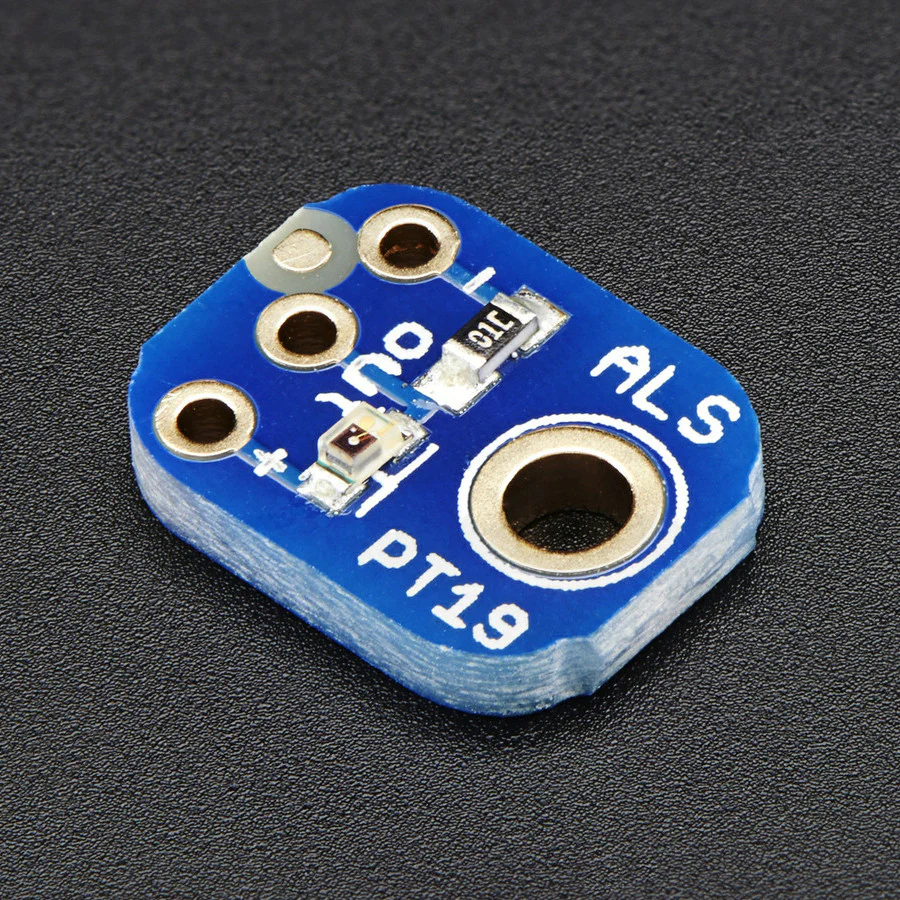
Add a teeny analog light sensor, the ALS PT19 analog light sensor is a great way to upgrade a project that uses a photocell and needs RoHS compliance.
Due to the high rejection ratio of infrared radiation, the spectral response of the ambient light sensor is close to that of human eyes.
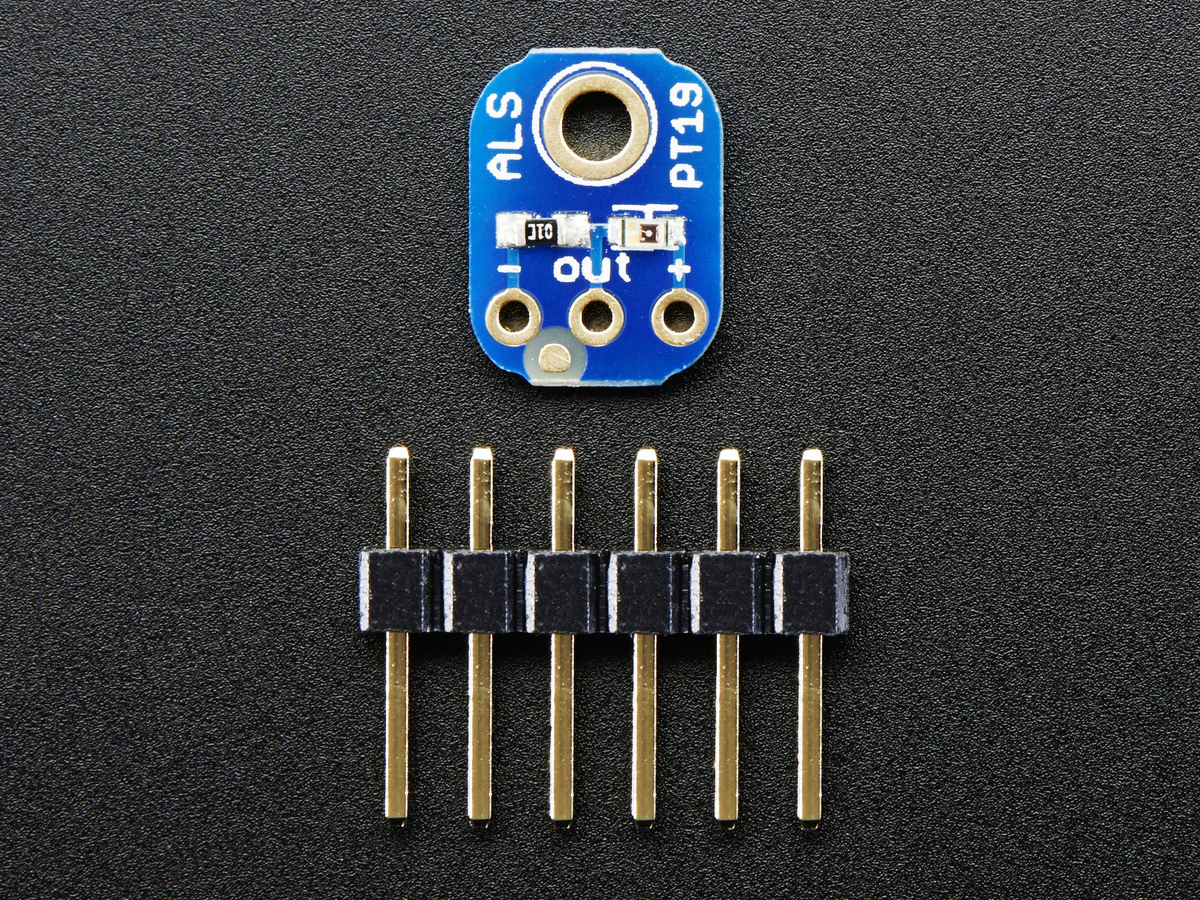
It's a pretty simple sensor - connect - to ground, + to 2.5V-5.5V or so to power it. Now measure the analog voltage on the OUT pin. That's it! The voltage will increase when the sensor detects more light.
TECHNICAL DETAILS
- Datasheet
- 7.8mm x 10.6mm x 2.4mm / 0.3" x 0.4" x 0.09"
- Weight: 0.2g
Original: $2.00
-50%$2.00
$1.00More Images
Adafruit ALS-PT19 Analog Light Sensor Breakout
Add a teeny analog light sensor, the ALS PT19 analog light sensor is a great way to upgrade a project that uses a photocell and needs RoHS compliance.
Due to the high rejection ratio of infrared radiation, the spectral response of the ambient light sensor is close to that of human eyes.
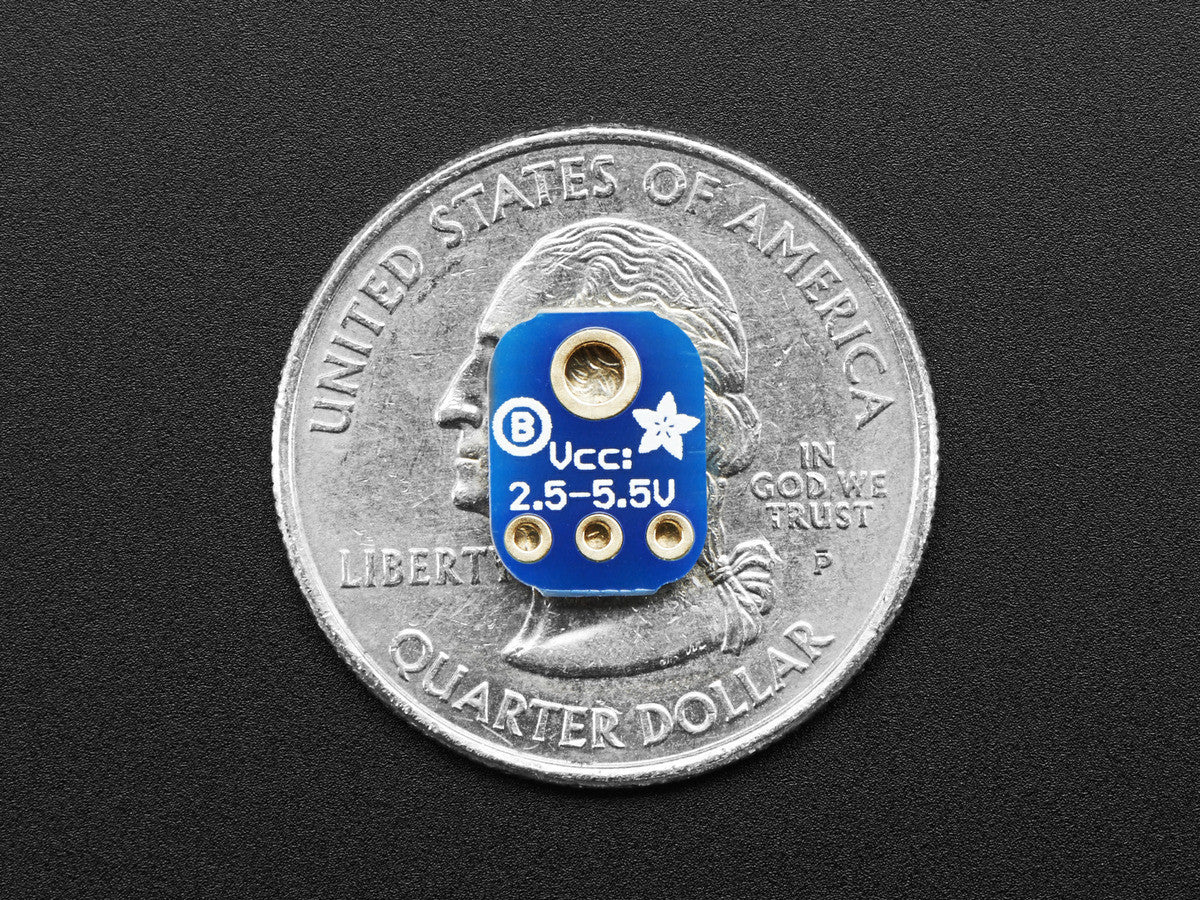
It's a pretty simple sensor - connect - to ground, + to 2.5V-5.5V or so to power it. Now measure the analog voltage on the OUT pin. That's it! The voltage will increase when the sensor detects more light.
TECHNICAL DETAILS
- Datasheet
- 7.8mm x 10.6mm x 2.4mm / 0.3" x 0.4" x 0.09"
- Weight: 0.2g
Product Information
Product Information
Shipping & Returns
Shipping & Returns
Description
Add a teeny analog light sensor, the ALS PT19 analog light sensor is a great way to upgrade a project that uses a photocell and needs RoHS compliance.
Due to the high rejection ratio of infrared radiation, the spectral response of the ambient light sensor is close to that of human eyes.
It's a pretty simple sensor - connect - to ground, + to 2.5V-5.5V or so to power it. Now measure the analog voltage on the OUT pin. That's it! The voltage will increase when the sensor detects more light.
TECHNICAL DETAILS
- Datasheet
- 7.8mm x 10.6mm x 2.4mm / 0.3" x 0.4" x 0.09"
- Weight: 0.2g